Skip to content
By Li Wei | Published August 2026

Off the Beaten Path

12 Hidden Gems in Xi'an

Every guide tells you about the Terracotta Warriors and the City Wall. Good — they're incredible. But Xi'an has layers most visitors never see. These are the places we keep coming back to — the spots that make us fall deeper in love with this city.

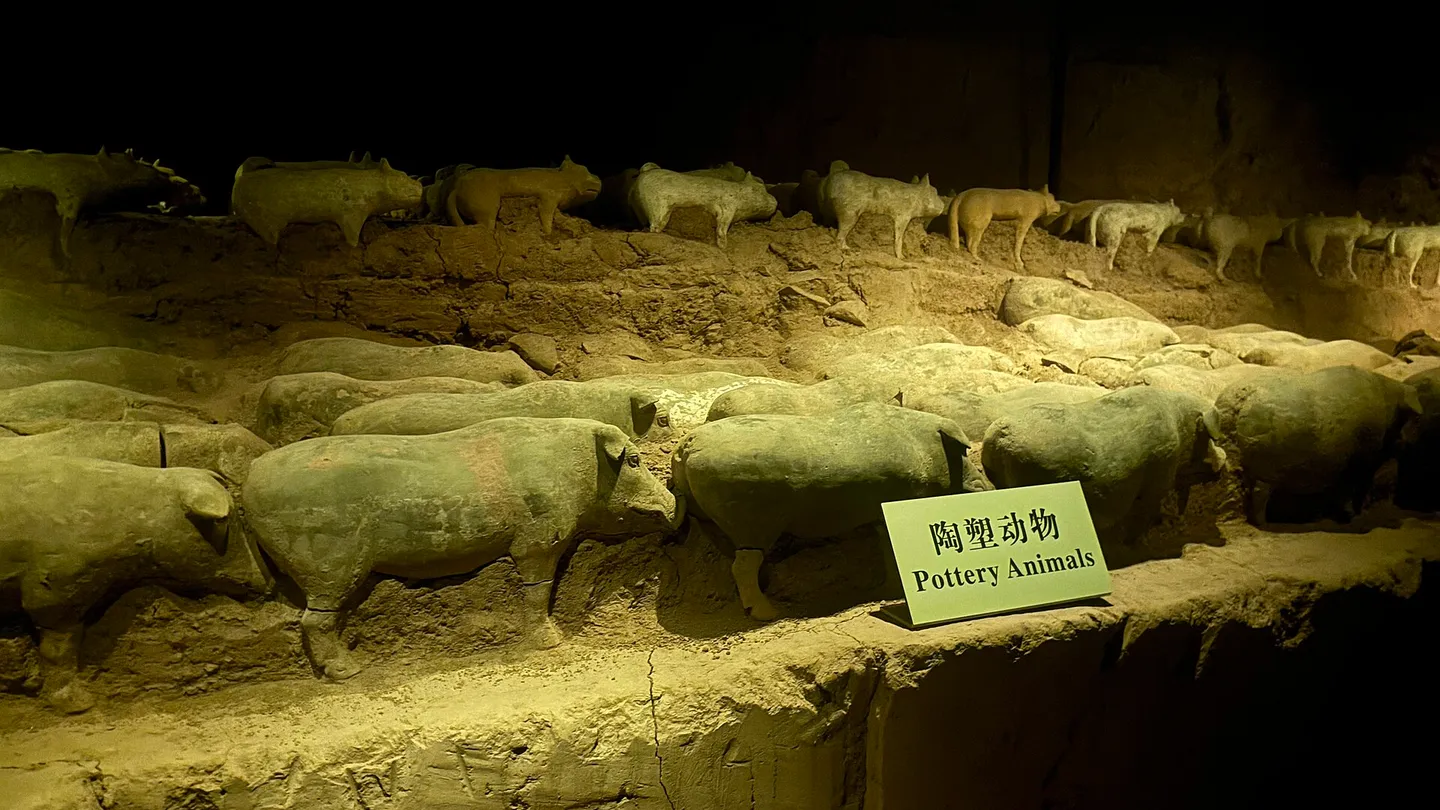
Excavated miniature figurines at the Han Yangling Mausoleum, one of Xi'an's hidden gems
LW

Written by Li Wei

History & Culture Writer · Xi'an since 2019

Li Wei has lived in Xi'an since 2019 and has visited every major museum and historical site in Shaanxi province at least three times. He spends his weekends exploring forgotten Tang dynasty ruins and reading Ming-era city maps. Before writing travel guides, he worked as a research assistant at the Shaanxi History Museum.

Chinese history (Zhou, Qin, Han, Tang dynasties)Archaeology and museum curationSilk Road history

Why trust this list? We've lived in and explored Xi'an since 2019. Every place on this list has been visited multiple times. No affiliate links, no paid placements — just genuine local favorites.

How We Picked These 12

We applied three filters. First, a place had to be genuinely worth the detour — not just obscure for its own sake. Second, it had to be reachable by public transport or a short taxi ride, because nothing kills a hidden gem faster than two hours of confusing transfers. Third, we had to have been there ourselves at least twice, in different seasons, because some of these spots only make sense at a specific time of day or year.

That last filter removed more places than it kept. The famous "secret" tea houses and "locals-only" restaurants that show up in other lists turned out to be tourist traps with a thin layer of authenticity painted on. The spots below survived — every single one is a place we would take a visiting friend without hesitation.

We also deliberately mixed types: museums, parks, food streets, sunset viewpoints, and two places you need a full day to reach. If you only have a few hours, start with Sajinqiao, the South Gate sunset, and Qinglong Temple. They cost nothing, take minimal planning, and give you the real Xi'an immediately.

1

Han Yangling Museum

汉阳陵博物馆

Thousands of miniature terracotta figurines from the Han Dynasty — and you walk over them on glass floors. Weekday mornings, you might be the only visitor. Far fewer crowds than the Terracotta Warriors, and arguably more atmospheric.

Tip

Take Metro Line 14 to the airport direction, get off at Han Yangling station. The museum is a 10-minute walk.

2

Sajinqiao Street

洒金桥

Where Xi'an locals actually eat. Two blocks north of the touristy Muslim Quarter, the souvenir shops vanish and the real food begins. Biangbiang noodles for $2 roujiamo for $1 and lamb soup that has been simmering since dawn.

Tip

Go before 10 AM for breakfast. The best stalls sell out by noon.

3

Xingqing Palace Park

兴庆宫公园

Built on the ruins of the Tang Dynasty's secondary palace. Locals practice tai chi at dawn, children play by the lake, and the ancient foundations are visible beneath modern pathways. Free entry, zero tourists.

Tip

Visit at 7 AM to see the tai chi practitioners. It's like stepping into a time machine.

4

The Forest of Stone Steles Museum

碑林博物馆

11,000 stone tablets carved with 2,000 years of Chinese calligraphy. If you love typography, this is sacred ground. The steles include the earliest versions of characters still used today.

Tip

Hire a guide ($15) — without explanation, the steles are just old rocks. With context, they're extraordinary.

5

Dapiyuan Alley

大皮院

A quiet lane parallel to the Muslim Quarter chaos. Family-run noodle shops, old men drinking tea, cats sleeping in doorways. The food is better and cheaper than the main quarter, and nobody is shoving a selfie stick in your face.

Tip

Try the hand-pulled noodles at any shop with a line of locals out the door.

6

South Gate Sunset

南门日落

The southwest corner of the City Wall at sunset. Not the main South Gate entrance — the quieter southwest angle tower. The Bell Tower glows in the distance, the moat turns gold, and the lanterns begin to flicker on.

Tip

Arrive 30 minutes before sunset. The light changes fast. Bring a camera with a good zoom for the Bell Tower.

7

Qinglong Temple

青龙寺

The temple where Japanese Buddhist monks studied in the Tang Dynasty. In late March, the cherry blossoms here rival anything in Japan — and it's completely free, with a fraction of the crowds.

Tip

Peak bloom is usually March 25–April 5. Weekday mornings are emptiest.

8

The Old Xi'an Railway Station Area

老火车站区域

The neighborhood around the old train station has gritty character: street food stalls, budget hotels, and the kind of authentic local energy that guidebooks don't cover. Not pretty, but real.

Tip

Walk east from the station along Jiefang Road for unexpected food discoveries.

9

Tang Dynasty City Wall Ruins Park

唐城墙遗址公园

A linear park built along the remaining foundations of the Tang Dynasty's outer city wall. Joggers, dog walkers, and ancient earthworks side by side. Most tourists have no idea it exists.

Tip

The section near Yanning Gate is the most atmospheric, especially in autumn.

10

Banpo Museum

半坡博物馆

A 6,000-year-old Neolithic village excavated in situ. You walk on raised platforms above actual ancient dwellings. The painted pottery and burial sites are haunting. Far from the tourist trail.

Tip

Combine with a visit to the Qujiang area for a full day of museums and parks.

11

Guanshan Pastureland

关山牧场

Rolling green hills 3 hours from Xi'an that look more like Mongolia than China. Horseback riding, yurts, and starry nights. Almost no foreign tourists.

Tip

Best in June–September. Bring warm clothes — nights are cold even in summer at this altitude.

12

The Underground Book Market

地下书市

Near the Small Wild Goose Pagoda, a warren of underground stalls selling second-hand books, vintage maps, calligraphy supplies, and old postcards. A collector's paradise.

Tip

Go on weekends when all the stalls are open. Bargaining is expected.

The Honest Practicalities of Going Off-Google

We want you to love these places, so let's be honest about what "hidden" actually means in practice:

English signage disappears fast. Han Yangling, Banpo, and the Tang Dynasty City Wall Ruins Park have minimal English signage. Download an offline translator and screenshot this page before you go — you will not have a signal inside several of these places.

Some require a Chinese phone number. The Underground Book Market vendors and several Sajinqiao stalls only accept WeChat Pay or Alipay. Set up mobile payments before you leave the hotel — see our payment guide.

Weekday timing is the secret weapon. We visited every gem on a weekday at least once. The difference is extreme — Han Yangling on a Tuesday morning vs a Saturday is night and day.

Bring cash for small purchases. Even where cards work, a ¥10 bill or two makes the roujiamo stalls and book vendors happier, and it's faster.
FAQ

Are these hidden gems suitable for first-time visitors?

Most of them. Sajinqiao, Dapiyuan, and the South Gate sunset are perfect additions to any first trip. More remote spots like Guanshan Pastureland and Banpo Museum work better if you have 4+ days. All are safe and accessible by public transport or taxi.

Do I need a guide for the Forest of Stone Steles?

Strongly recommended. Without explanation, the steles are historically opaque. A live guide ($15-$22) or audio guide transforms the experience from confusing to extraordinary. The museum covers 2,000 years of Chinese calligraphy and history.

When is the best time to visit Qinglong Temple for cherry blossoms?

Peak bloom is usually March 25 to April 5. The temple is free and open during daytime hours. Weekday mornings have the fewest crowds. The blossoms last about 10 days depending on wind and rain.

Want the full Xi'an experience?

Our attraction guide covers the must-sees. This list covers the rest.